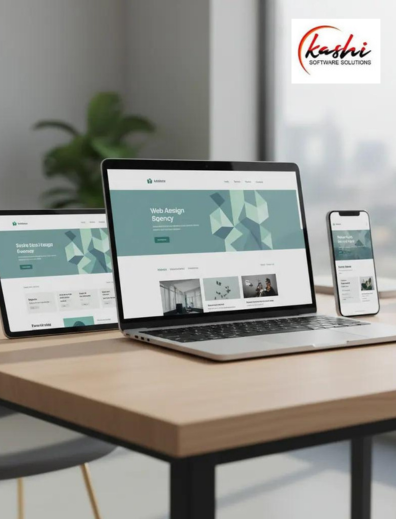
In today’s digital-first business environment, your website is often the first interaction a potential customer has with your brand. Whether you run a startup, local business, educational institution, eCommerce store, professional service, or established company, a well-designed website can help you build credibility, attract visitors, generate leads, and turn prospects into customers.
Choosing the right website design company is therefore more than finding someone who can create attractive pages. A professional web design partner should understand user experience, responsive design, website performance, security, search engine optimization, content structure, conversion optimization, and your long-term business goals.
For businesses looking for professional web solutions in India, Kashi Software Solutions provides website development services for businesses, startups, institutions and organizations. Its listed services include custom websites, eCommerce websites, WordPress websites, business websites, landing pages, blogs, web applications, redesign and maintenance, as well as SEO and speed optimization.
What Is a Website Design Company?
A website design company specializes in planning, designing and developing websites that represent a business or organization online.
Website design normally involves much more than selecting colors and creating page layouts. A professional website design process can include:
- Website planning and information architecture
- UI/UX design
- Responsive design
- Mobile-first development
- Website development
- Content organization
- Search engine optimization
- Speed optimization
- Security implementation
- Contact and lead-generation forms
- Analytics integration
- eCommerce functionality
- Website maintenance
A good website should look professional, but it should also be easy to navigate, accessible on different devices, fast to load, secure and useful to the target audience.
Google recommends paying attention to real-world page experience and Core Web Vitals, including Largest Contentful Paint (LCP), Interaction to Next Paint (INP), and Cumulative Layout Shift (CLS).
Why Does Your Business Need a Professional Website?
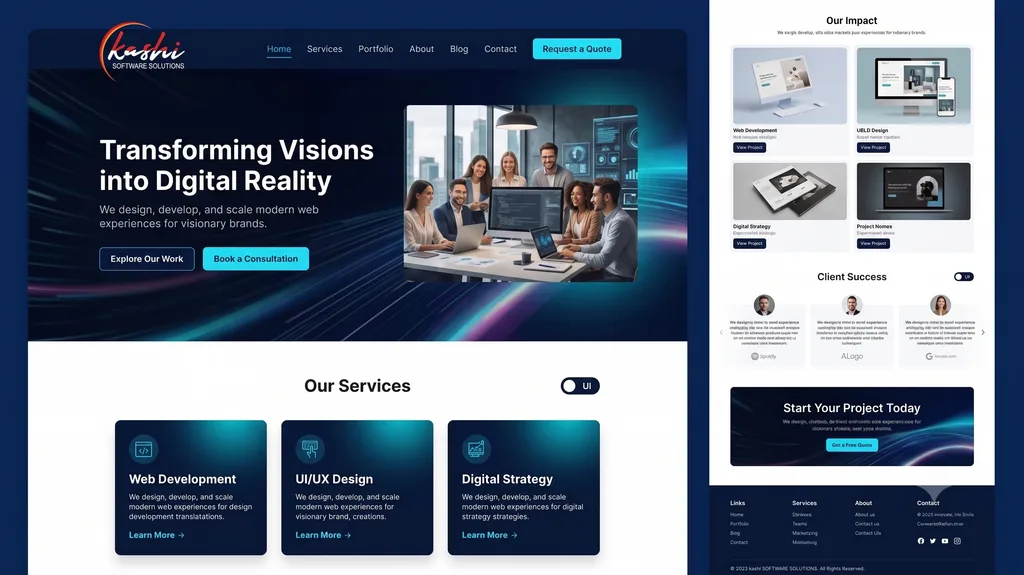
A website works as your digital business identity. Unlike a social media profile, your website gives you greater control over your brand presentation, content, services, customer journey and online presence.
1. Builds Brand Credibility
Customers often research a company online before contacting or purchasing from it.
A professional website can communicate:
- Who you are
- What services you provide
- Where you operate
- What makes your business different
- Your portfolio or projects
- Customer reviews and testimonials
- Contact information
- Frequently asked questions
A poorly designed or outdated website can create doubts about a business. A modern, organized website can create a stronger first impression.
2. Helps Generate Leads
A website can be designed around specific conversion goals.
For example, a business website can encourage visitors to:
- Call the company
- Send a WhatsApp message
- Submit an enquiry
- Request a quotation
- Book an appointment
- Download a brochure
- Purchase a product
- Subscribe to updates
This is why professional website design should focus not only on appearance but also on conversion rate optimization.
3. Makes Your Business Available 24/7
Your physical office may have specific operating hours, but your website can provide information to customers around the clock.
Visitors can learn about your:
- Products
- Services
- Pricing
- Business location
- Contact details
- FAQs
- Portfolio
- Company background
This makes a website an important digital asset for businesses of almost every size.
4. Supports Search Engine Optimization
A properly structured website provides a foundation for SEO.
Professional web design can incorporate:
- Clean HTML structure
- Proper heading hierarchy
- Descriptive URLs
- Internal linking
- Image optimization
- Mobile responsiveness
- Metadata
- Structured data
- Fast loading
- Crawlable content
Google’s documentation recommends implementing structured data correctly and validating it using available testing tools.
5. Reaches Mobile Users
A large percentage of website visitors now access websites using smartphones.
A responsive website automatically adapts its layout to different screen sizes, including:
- Smartphones
- Tablets
- Laptops
- Desktop computers
Mobile-friendly design should include readable typography, properly sized buttons, optimized images, easy navigation and forms that are comfortable to use on smaller screens.
What Makes a Good Website Design?
A professional website combines visual design, usability, technology and business strategy.
Clean and Professional UI
The website should have a consistent visual identity.
Important design elements include:
- Brand colors
- Typography
- Icons
- Images
- Buttons
- Cards
- Spacing
- Navigation
- Section hierarchy
The goal should be to make important information easy to find rather than overwhelming visitors with unnecessary design elements.
User-Friendly Navigation
Visitors should be able to understand the website structure quickly.
A typical business website may include:
Home → About → Services → Portfolio → Blog → FAQ → Contact
For larger websites, categories and subcategories can make navigation easier.
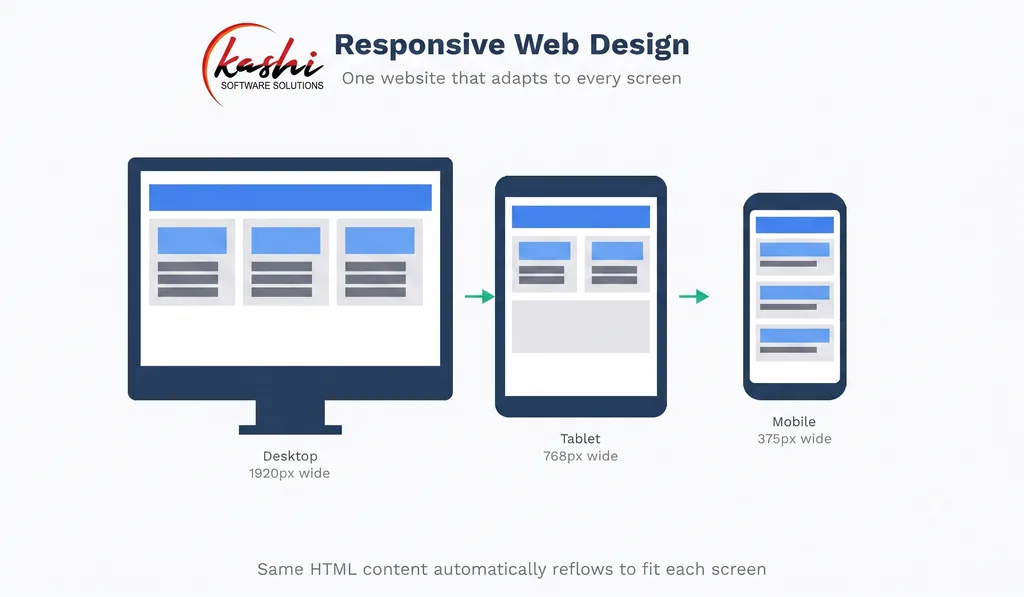
Responsive Layout
The same website should work properly across mobile, tablet and desktop screens.
Responsive design can improve usability and reduce the need for maintaining separate mobile and desktop versions.
Fast Loading Speed
Website speed affects user experience. Slow pages can cause visitors to leave before the content becomes visible.
Google’s PageSpeed Insights evaluates performance on mobile and desktop and provides diagnostics and optimization suggestions.
Google’s recommended Core Web Vitals targets include:
- LCP: within 2.5 seconds
- INP: less than 200 milliseconds
- CLS: less than 0.1
These metrics measure loading performance, responsiveness and visual stability.
Types of Websites a Professional Website Design Company Can Create
Different businesses require different website structures.
Business Website
A business website introduces your company, services, team, location and contact information.
It is suitable for:
- Local businesses
- Service providers
- Agencies
- Consultants
- Startups
- Professional firms
Corporate Website
Corporate websites are generally larger and may include multiple departments, services, locations and resources.
They often require advanced navigation, content management and integration with business systems.
eCommerce Website
An eCommerce website allows businesses to sell products online.
Important features can include:
- Product catalogue
- Shopping cart
- Checkout
- Payment gateway
- Customer accounts
- Order management
- Inventory management
- Shipping integration
- Coupons
- Product reviews
- Analytics
Kashi Software Solutions also provides eCommerce development services involving custom stores, WooCommerce, Shopify, Magento, payment gateways, inventory management, third-party integrations and performance optimization.
WordPress Website
WordPress is popular because businesses can manage website content without changing code for every update.
WordPress websites can be suitable for:
- Company websites
- Blogs
- News websites
- Portfolio websites
- Educational websites
- Small business websites
Landing Page
A landing page is generally designed around a specific marketing objective.
For example:
Google Ads → Landing Page → Enquiry Form → Sales Team
A landing page should have a clear headline, persuasive content, strong call-to-action and minimal distractions.
Web Application
Businesses with complex requirements may need custom web applications rather than standard websites.
Examples include:
- CRM systems
- School management systems
- Billing systems
- Customer portals
- Booking systems
- Inventory systems
- Business dashboards
Website Design vs Website Development
The terms website design and website development are often used together, but they represent different parts of the process.
Website design primarily focuses on:
- Appearance
- Layout
- User experience
- Typography
- Colors
- Navigation
- Visual hierarchy
Website development focuses more on:
- Front-end implementation
- Back-end programming
- Databases
- APIs
- Authentication
- Forms
- Integrations
- Server-side functionality
A professional website design company may provide both services so that the design and technical implementation work together.
Why Responsive Web Design Is Important
Imagine a customer searching for your business on a smartphone.
If the website:
- Has tiny text
- Requires horizontal scrolling
- Has buttons that are difficult to tap
- Loads oversized images
- Has broken menus
- Displays poorly on mobile
the customer may leave.
Responsive design helps create a consistent experience across devices.
Image Suggestion:
Use an image showing the same website on a desktop, tablet and smartphone.
Alt Text: Responsive website design displayed on desktop tablet and mobile
SEO-Friendly Website Design
SEO should not be added only after a website is completed. It should be considered during the planning and development stages.
Important On-Page SEO Elements
A professional website should consider:
- SEO-friendly title tags
- Meta descriptions
- One clear primary H1
- Proper H2/H3 structure
- Descriptive URLs
- Internal links
- Optimized images
- Descriptive image alt text
- Canonical URLs
- XML sitemap
- Robots.txt
- Structured data
- Mobile usability
- Page speed
How to Choose the Right Website Design Company
Selecting a web design company can have a long-term impact on your online business.
Consider these factors before making a decision.
1. Check Their Portfolio
Look at previous projects.
Ask:
- Does the design look modern?
- Are the websites responsive?
- Is navigation easy?
- Are the websites fast?
- Do the projects match your industry?
2. Check Their Technical Skills
Depending on your requirements, you may need technologies such as:
- HTML5
- CSS3
- JavaScript
- PHP
- WordPress
- Bootstrap
- Laravel
- React
- .NET
- MySQL
Kashi Software Solutions currently lists technologies including HTML5, CSS3, JavaScript, PHP, Bootstrap 5, WordPress, .NET, Laravel and React JS.
3. Ask About SEO
Your website should not only be visually attractive.
Ask the developer whether the project includes:
- SEO-friendly structure
- Metadata
- Schema markup
- Mobile optimization
- Speed optimization
- Search Console setup
- Analytics
- Sitemap
4. Ask About Maintenance
Websites require ongoing maintenance.
Maintenance may include:
- Security updates
- Software updates
- Backups
- Bug fixes
- Content updates
- Performance monitoring
- New features
5. Understand the Total Cost
Don’t compare companies only by the initial development price.
Ask whether the quotation includes:
- Domain
- Hosting
- SSL
- Design
- Development
- Content
- SEO
- Maintenance
- Third-party integrations
- Payment gateway integration
Website Design for Small Businesses
Small businesses do not necessarily need a huge website.
A well-planned 5–10 page website can be highly effective when it clearly communicates the business value.
A basic structure could be:
Home
↓
About Us
↓
Services
↓
Portfolio / Projects
↓
Testimonials
↓
FAQ
↓
Contact
The website can later be expanded as the business grows.
For local businesses, combining website design with local SEO can help potential customers discover the company when searching for relevant services in their area.
Website Design for Startups
Startups need websites that can evolve.
A startup website may initially contain:
- Home
- About
- Product/Service
- Features
- Pricing
- FAQ
- Contact
As the company grows, additional functionality can be added.
This may include:
- User registration
- Customer dashboard
- Payment systems
- Subscription management
- CRM integration
- API integration
- Mobile applications
Website Design for eCommerce Businesses
For online stores, design directly influences the shopping experience.
Important elements include:
- Clear product photography
- Product descriptions
- Search
- Filters
- Categories
- Product variations
- Cart
- Checkout
- Payment options
- Shipping information
- Returns policy
- Customer reviews
Importance of Website Security
Security should be considered from the beginning of website development.
A professional website may require:
- HTTPS/SSL
- Secure authentication
- Strong passwords
- Software updates
- Input validation
- Secure database handling
- Regular backups
- Access control
- Security monitoring
For websites handling customer accounts or payments, security becomes even more important.
Website Performance and Core Web Vitals
Website performance isn’t simply about making a website “fast.”
Modern performance measurement considers:
LCP — Loading Performance
How quickly the primary content becomes visible.
INP — Responsiveness
How quickly the page responds to user interactions.
CLS — Visual Stability
How much the layout unexpectedly moves while loading.
Google recommends good Core Web Vitals as part of providing a strong page experience.
Website owners can use Google’s PageSpeed Insights and Search Console to monitor performance. PageSpeed Insights combines lab analysis with available real-world Chrome user data.
Why Businesses in Varanasi Can Benefit From Professional Web Design
Varanasi has a diverse business ecosystem including:
- Hotels
- Restaurants
- Educational institutions
- Healthcare providers
- Travel businesses
- Manufacturers
- Retailers
- Service providers
- Startups
- Professional consultants
- Local shops
- Tourism businesses
A professionally designed website can help these businesses reach customers beyond their immediate geographical area.
Kashi Software Solutions is based in Varanasi, Uttar Pradesh, and its website development service specifically targets businesses seeking responsive, SEO-friendly and customized websites.
Why Choose Kashi Software Solutions for Website Design?
Kashi Software Solutions presents itself as an IT service provider based in Varanasi, Uttar Pradesh, offering website development and other digital technology services. Its website highlights customized solutions, modern technologies, result-oriented services and dedicated support.
Its website development offering includes:
- Custom website development
- eCommerce website development
- WordPress development
- Business and corporate websites
- Landing page design
- Blog and news websites
- Web application development
- Website redesign
- Website maintenance
- SEO and speed optimization
These services can be useful for businesses that want both website design and technical development under one provider.
For businesses also looking for online promotion, Kashi Software Solutions lists SEO, social media marketing, Google Ads, content marketing, email marketing, Bulk SMS and WhatsApp marketing among its digital marketing services.
Website Design Company: What Should You Expect From the Process?
A professional website project generally follows several stages.
Step 1: Requirement Analysis
The development team understands:
- Business objectives
- Target audience
- Required pages
- Features
- Competitors
- Branding
- Budget
- Timeline
Step 2: Sitemap Planning
The website’s structure is created before development.
Step 3: UI/UX Design
The visual layout and user journey are planned.
Step 4: Development
The approved design is converted into a working website.
Step 5: Content and SEO
Content, images, metadata, headings and structured data are implemented.
Step 6: Testing
The website is tested across:
- Mobile
- Tablet
- Desktop
- Browsers
- Forms
- Links
- Performance
- Security
Step 7: Launch
After final approval, the website is deployed to the live server.
Step 8: Maintenance
Regular updates and monitoring keep the website secure and functional.
How Much Does Website Design Cost?
There is no single price for website design because the cost depends on the project’s requirements.
A simple business website may require fewer pages and features, while an eCommerce platform or custom web application can require considerably more development.
Factors affecting website design cost include:
- Number of pages
- Custom UI/UX
- CMS requirements
- eCommerce functionality
- Payment gateway
- API integrations
- Database requirements
- User accounts
- SEO requirements
- Content creation
- Hosting
- Maintenance
- Custom software features
Instead of selecting a company solely because it offers the lowest price, businesses should evaluate the overall value, quality, support and scalability of the solution.
Common Website Design Mistakes to Avoid
Mistake 1: Designing Only for Desktop
Always test mobile layouts.
Mistake 2: Using Very Large Images
Unoptimized images can negatively affect loading performance.
Mistake 3: Too Many Popups
Excessive popups can make websites difficult to use.
Mistake 4: Weak Call-to-Action
Visitors should understand what to do next.
Examples:
Get a Free Quote
Call Now
Request a Demo
Start Your Project
Mistake 5: Ignoring SEO
SEO should be considered during website architecture and development.
Mistake 6: No Maintenance Plan
Websites need ongoing updates, backups and security checks.
External Resources for Better Website Design and SEO
For web standards, performance and SEO, businesses and developers can refer to authoritative resources such as:
- Google Search Central – SEO & Search Documentation
- Google PageSpeed Insights
- Google Search Console
- Schema.org
- MDN Web Docs
- W3C Web Standards
- Web.dev
These are preferable to low-quality SEO blogs when researching technical web standards and search documentation.
Frequently Asked Questions About Website Design Companies
1. What does a website design company do?
A website design company plans, designs and develops websites for businesses and organizations. Services may include UI/UX design, responsive development, SEO, eCommerce development, website maintenance and custom web applications.
2. How do I choose the best website design company?
Review the company’s portfolio, technical expertise, reviews, communication process, SEO capabilities, maintenance options, pricing and previous projects. Choose a company that understands your business objectives rather than focusing only on visual design.
3. How much does professional website design cost?
The cost depends on the number of pages, design complexity, functionality, integrations, eCommerce requirements, content, SEO and maintenance. A simple business website will generally require less work than a custom eCommerce platform or web application.
4. Is responsive website design important?
Yes. Responsive design allows a website to adapt to smartphones, tablets and desktop screens, providing a better experience for users on different devices.
5. Can a website help with SEO?
Yes. A technically sound website can provide a strong foundation for SEO through crawlable content, proper headings, metadata, internal links, structured data, mobile usability and good performance.
6. What is an SEO-friendly website?
An SEO-friendly website is structured so that search engines can efficiently crawl, understand and index its content while providing a good experience for users.
7. Does my small business need a website?
For many businesses, a website can provide credibility, service information, lead generation, contact options and visibility in search engines. The size of the website should depend on the business’s actual needs.
8. What is the difference between web design and web development?
Web design focuses primarily on visual presentation and user experience, while web development implements the design and functionality using front-end, back-end and database technologies.
9. Should I choose WordPress or custom development?
WordPress can be suitable when you need a manageable content-driven website. Custom development may be better when you require unique functionality, complex workflows, custom integrations or specialized business software.
10. How important is website speed?
Website speed is important for user experience and page experience. Google recommends monitoring Core Web Vitals such as LCP, INP and CLS.
11. Can Kashi Software Solutions create eCommerce websites?
Yes. Kashi Software Solutions lists eCommerce development services including custom eCommerce, WooCommerce, Shopify, Magento, payment gateway integration, inventory and order management, third-party integrations and performance optimization.
12. Does a website need ongoing maintenance?
Yes. Regular maintenance can include security updates, backups, bug fixes, content updates, performance optimization and technical improvements.